

Custom Furniture Factory for Commercial Spaces

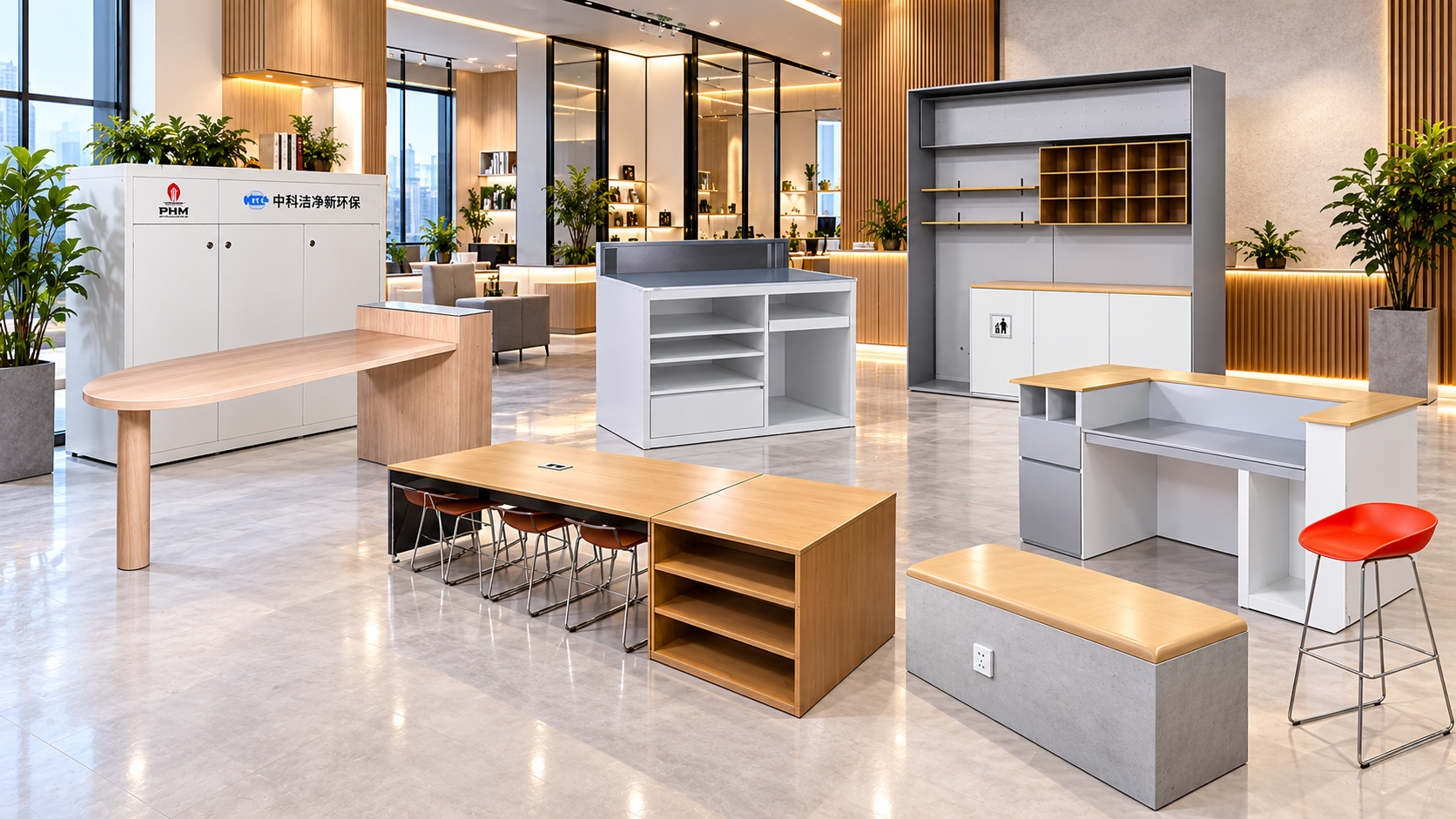
Commercial spaces require furniture that combines functionality, durability, and visual consistency. From retail stores and showrooms to offices and customer service areas, every business environment has specific requirements for furniture dimensions, materials, layouts, and brand identity. Working with a professional custom furniture factory allows businesses to develop furniture solutions tailored to their operational needs and commercial space requirements.
PT Run Hui Indonesia provides custom manufacturing solutions for commercial furniture projects. With support for design development, sample production, manufacturing, logistics, installation, and after-sales services according to project requirements, businesses can develop furniture based on their preferred specifications and project objectives.
Whether you are planning a new retail outlet, upgrading a showroom, or furnishing multiple commercial locations, custom furniture manufacturing offers greater flexibility in developing products that align with your business requirements.
Why Choose a Custom Furniture Factory for Commercial Projects?
Ready-made furniture does not always meet the specific requirements of commercial environments. Differences in floor plans, product dimensions, customer traffic, storage needs, and corporate branding may require a more tailored approach.
A custom furniture factory helps businesses develop furniture according to defined specifications rather than relying exclusively on standard products.
Key benefits include:
- Made-to-order designs: Customize dimensions, configurations, colors, and finishes to suit your commercial space.
- Flexible material selection: Evaluate materials according to structural requirements, appearance, maintenance, and project budget.
- Consistent brand presentation: Incorporate approved brand colors, logos, and design elements into furniture where required.
- Project-based manufacturing: Plan furniture production for individual locations or multi-site commercial projects.
- Space optimization: Develop furniture layouts that support operational workflows, product presentation, and customer interactions.
By establishing clear specifications from the beginning, businesses can improve coordination between design, manufacturing, and project implementation.
Custom Commercial Furniture Solutions
Different commercial environments require different furniture configurations. Product dimensions, construction, finishes, and functional details can be developed according to the intended application.
1. Retail Counters and Cashier Desks
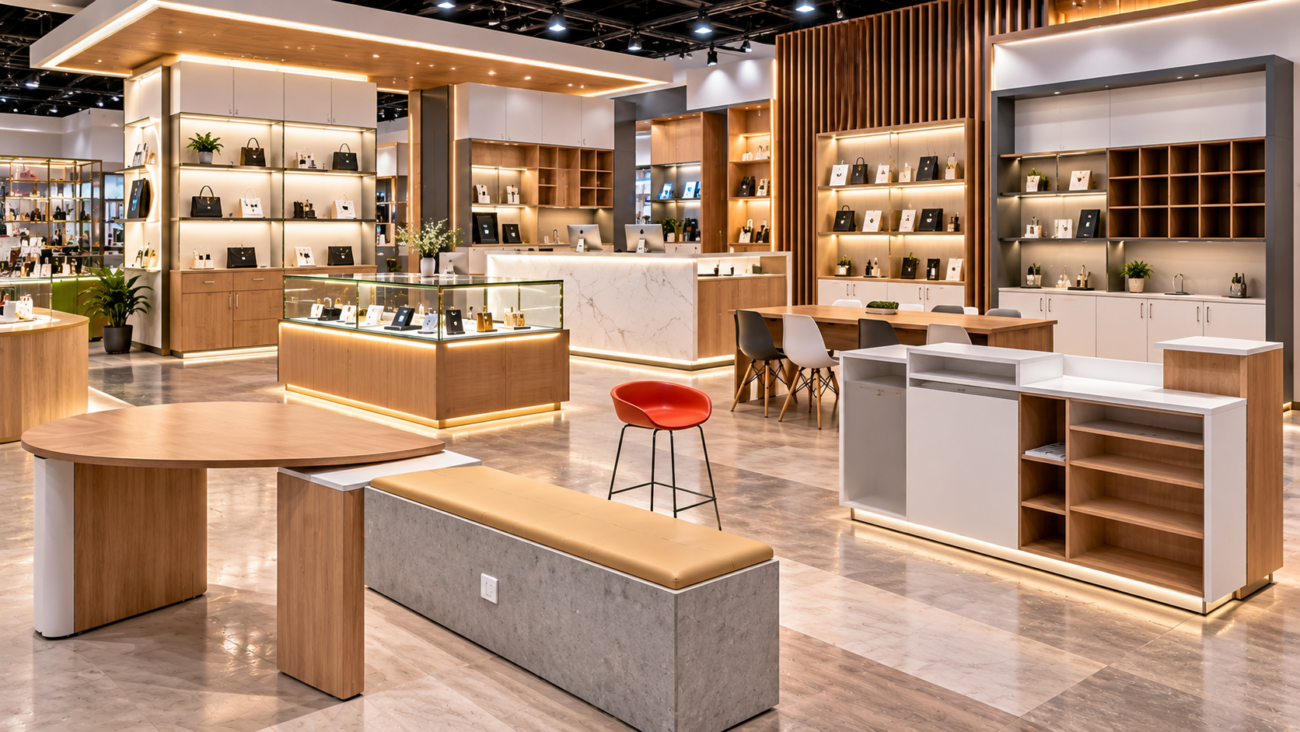
Retail counters and cashier desks support daily transactions while contributing to the overall appearance of a store. Custom designs can accommodate point-of-sale equipment, cable management, storage compartments, staff workspace, and brand-related visual elements.
Dimensions and configurations can be planned according to the available floor space and operational requirements.
2. Display Tables and Product Pedestals
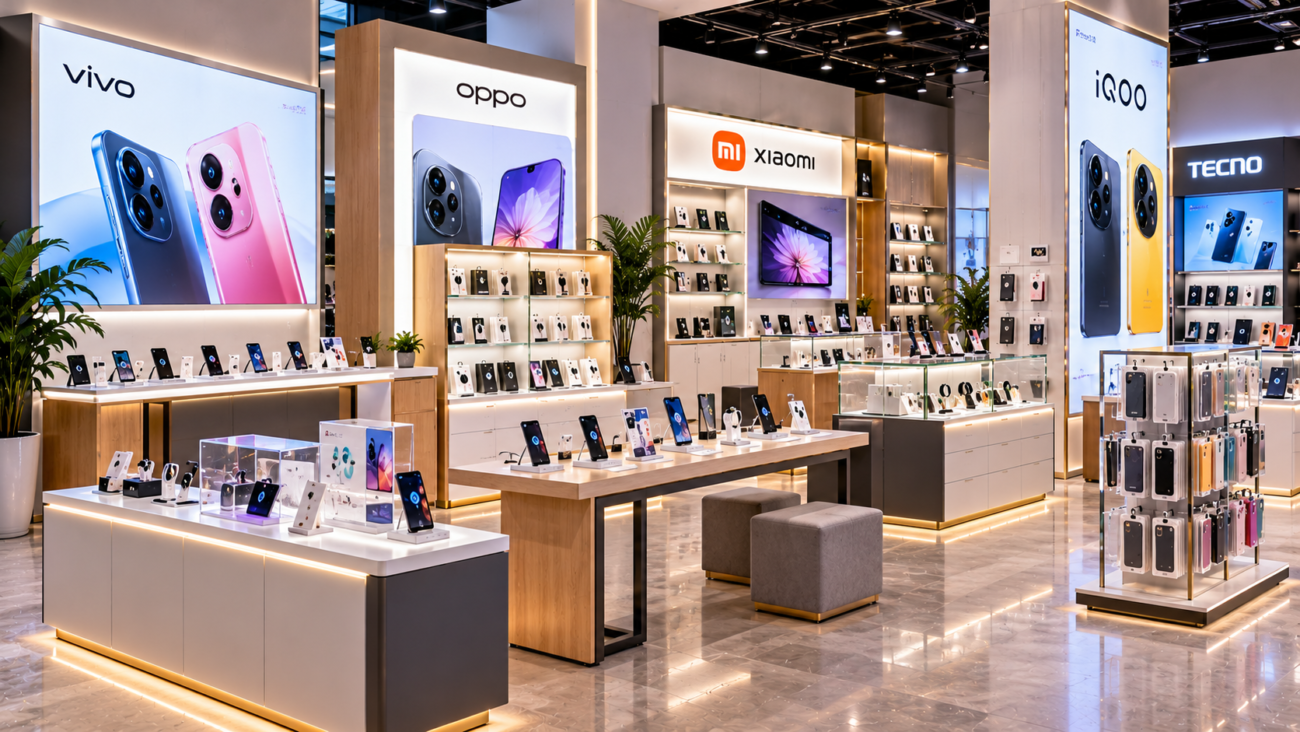
Display tables and product pedestals help businesses present products in an organized and visually appealing manner. These furniture solutions can be customized according to product dimensions, display objectives, customer access, and showroom layouts.
Suitable configurations can support product launches, retail merchandising, promotional displays, and showroom presentations.
3. Reception Desks and Consultation Tables
Reception desks establish the first point of interaction between a business and its visitors. Custom reception furniture can be developed to complement interior design concepts while providing practical workspace and storage.
Consultation tables and worktables can also be designed for customer service areas, professional offices, and commercial environments where functionality and efficient space utilization are important.
4. Gondola Shelving and Wall Shelving
Retail shelving systems help organize merchandise and make effective use of available floor and wall space. Gondola shelving and wall shelving can be developed according to product categories, shelf dimensions, storage requirements, and the intended retail layout.
Load capacity, structural stability, installation methods, and applicable safety requirements should be considered when defining the final specifications.
5. Modular Tables and Multifunctional Furniture
Businesses with changing operational needs may benefit from modular and multifunctional furniture. Modular tables, workbenches, storage benches, and other made-to-order furnishings can be developed to accommodate specific activities and space configurations.
These solutions are particularly relevant when furniture must support flexible layouts or multiple operational functions.
Material Options for Custom Furniture Manufacturing
Material selection plays an important role in the performance, appearance, and cost of commercial furniture. The appropriate material depends on the intended application, structural requirements, finishing preferences, maintenance expectations, and available budget.
Common material options include:
- MDF: Suitable for various interior furniture panels and applications requiring a smooth surface for compatible finishing treatments.
- Plywood: A potential option for furniture construction where panel strength, stability, and fabrication requirements are important.
- Metal: Used for frames, supports, structural components, and selected design features according to engineering requirements.
- Laminate finishes: Available in different surface appearances to support commercial interior concepts and maintenance requirements.
Different materials can be combined within a single furniture design when appropriate. Final material specifications should be evaluated according to the product’s intended use, construction details, expected loads, and required finish quality.
Our Custom Furniture Manufacturing Process
A structured manufacturing process helps translate business requirements into practical furniture specifications. PT Run Hui Indonesia supports an integrated approach to custom product development, with the scope of each stage determined by the project requirements.
1. Project Consultation
The process begins with an assessment of the intended application, product types, dimensions, estimated quantities, preferred materials, budget, and target completion schedule.
This information provides a foundation for defining the project scope and identifying the most appropriate manufacturing approach.
2. Design Development
Furniture designs are developed according to functional and visual requirements. The design stage may cover dimensions, component configurations, material selection, surface finishes, color specifications, and branding elements.
Existing drawings, reference images, or preliminary concepts can help communicate the desired outcome.
3. Sample Development
For projects requiring design or material validation, sample development can help evaluate product appearance, dimensions, construction details, and finishing before proceeding with larger production quantities.
The need for sampling depends on project complexity and the agreed development process.
4. Production and Quality Control
Once the specifications have been approved, manufacturing proceeds according to the agreed requirements. Quality checks can cover dimensional accuracy, finishing consistency, structural construction, component completeness, and other project-specific acceptance criteria.
Clear specifications help reduce ambiguity during production and final inspection.
5. Logistics and Installation
Delivery and installation requirements can be planned according to product quantities, delivery locations, site access, packaging needs, and installation complexity.
Scheduling, transportation arrangements, and installation responsibilities should be confirmed during project planning to support a coordinated implementation process.
Custom Furniture Manufacturing for Large-Scale Projects
Commercial furniture procurement often involves more than individual products. Retail chains, showroom operators, office developers, and businesses expanding into multiple locations may need coordinated production and consistent specifications across a wider project scope.
Working with a custom furniture manufacturer allows businesses to establish common specifications for dimensions, materials, colors, finishes, and construction details.
For multi-location projects, standardized designs can help maintain a consistent visual identity while allowing selected adjustments to accommodate different site conditions.
Important planning considerations include:
- Product specifications and approved drawings.
- Estimated production quantities and manufacturing requirements.
- Material availability and finishing standards.
- Production schedules and delivery milestones.
- Packaging, transportation, and installation requirements.
- Quality inspection and acceptance procedures.
Production capacity, minimum order quantities, lead times, and project feasibility should be confirmed directly with the manufacturer based on the actual scope of work.
PT Run Hui Indonesia: Your Custom Furniture Manufacturing Partner
PT Run Hui Indonesia supports businesses seeking made-to-order furniture and commercial product manufacturing solutions. Our service approach can cover the project journey from design and sample development to production, logistics, installation, and after-sales support, subject to the agreed project scope.
By discussing product requirements at an early stage, businesses can evaluate design options, material alternatives, functional details, and manufacturing considerations before confirming their orders.
Whether your project involves retail counters, cashier desks, display tables, reception desks, shelving systems, or other commercial furniture, our team can review your requirements and discuss a suitable approach to product development.
Each project is evaluated according to its specific requirements, including product complexity, quantities, materials, finishing, delivery location, and additional services.
How to Request a Custom Furniture Quotation
To begin your custom furniture project, prepare the following information where available:
- Product requirements: Identify the furniture types and their intended applications.
- Dimensions or drawings: Provide measurements, technical drawings, or reference images.
- Material and finishing preferences: Specify preferred materials, colors, and surface treatments.
- Estimated quantities: Indicate the number of units required for your project.
- Project location: Provide the delivery location and any installation requirements.
- Target schedule: Share your expected production and delivery timeline.
If your design is not yet finalized, you can start with a project concept, functional requirements, and reference images. These details can help establish the initial scope for consultation.
Contact PT Run Hui Indonesia through CERESDISPLAY to discuss your requirements. Share your design references, dimensions, preferred materials, quantity, and project timeline so the team can review the proposed scope and discuss the next steps.
CONTACT US
Related Products
Explore a wide range of custom display, signage, furniture, and branding solutions from CERESDISPLAY.ID.
Showcase Display | Store Furniture | Neon Box | 3D Letters | Acrylic Display | Outdoor POSM | Clothing & Garments
Connect with CERESDISPLAY.ID
Explore our manufacturing portfolio, latest projects, workshop activities, and company updates through our social media channels.