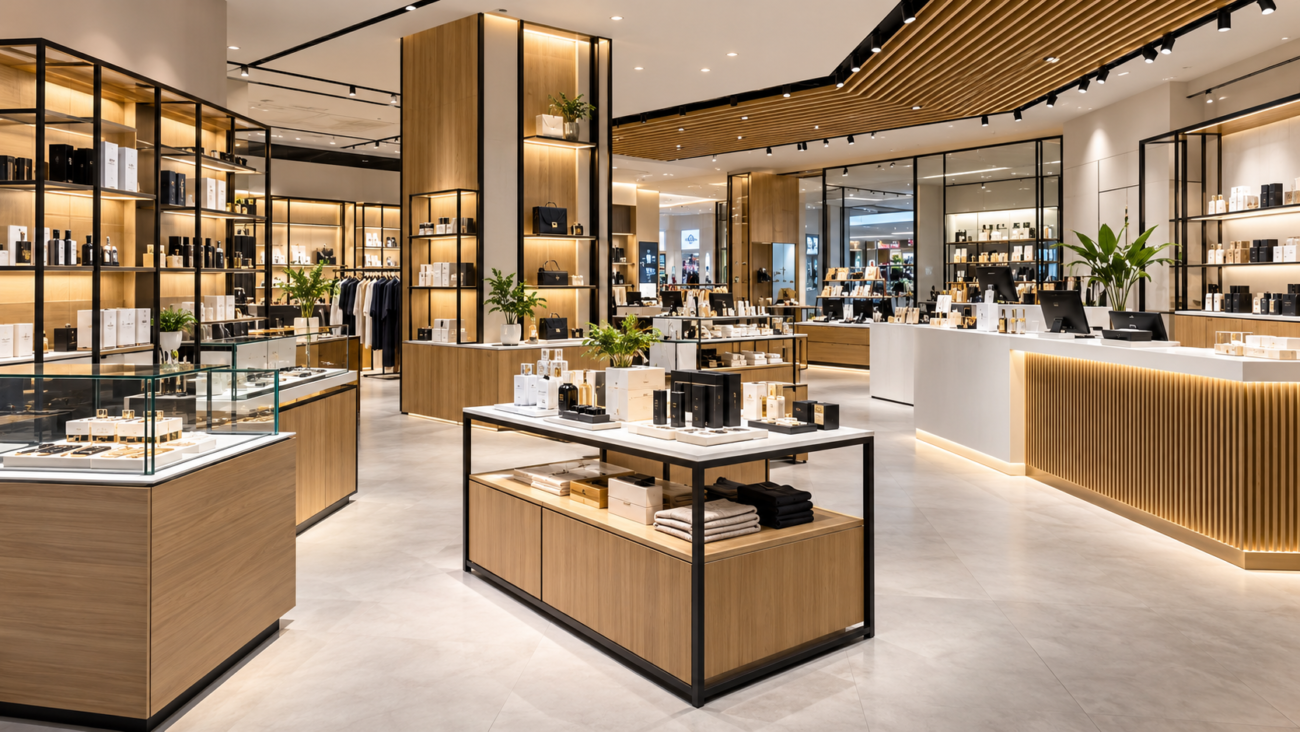


Custom Retail Etalase and Product Presentation

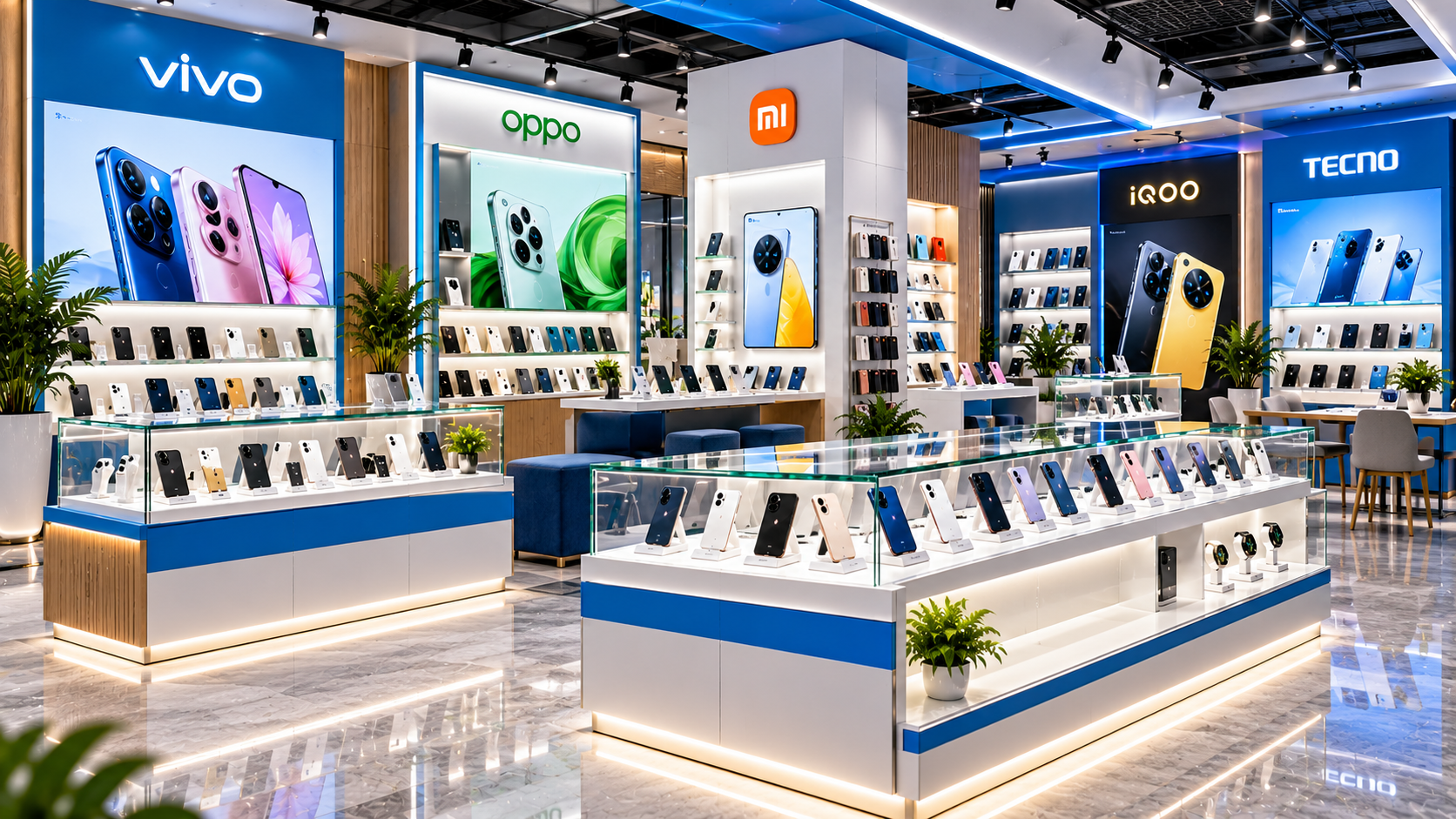
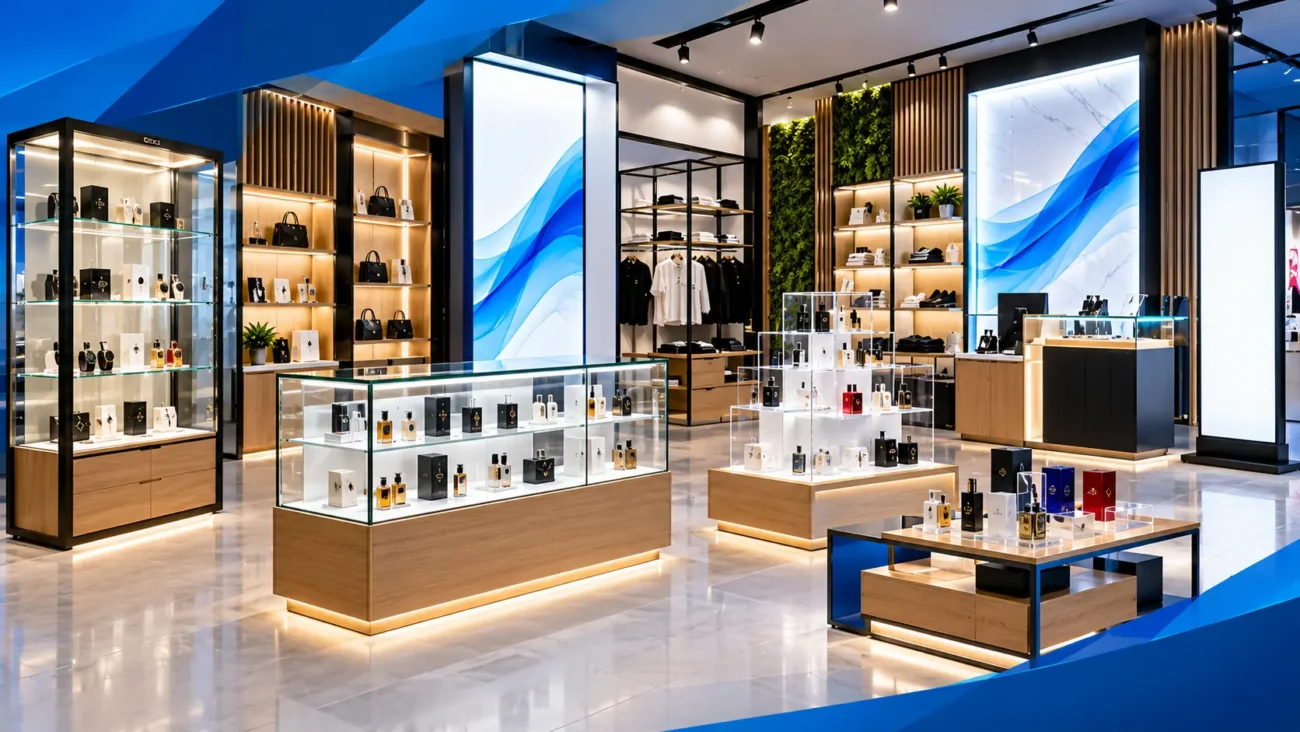
Custom retail etalase solutions help businesses present products in an organized, professional, and visually appealing way. In retail environments, the right display design can improve product visibility, support efficient space utilization, and create a consistent presentation across stores, showrooms, and commercial spaces.
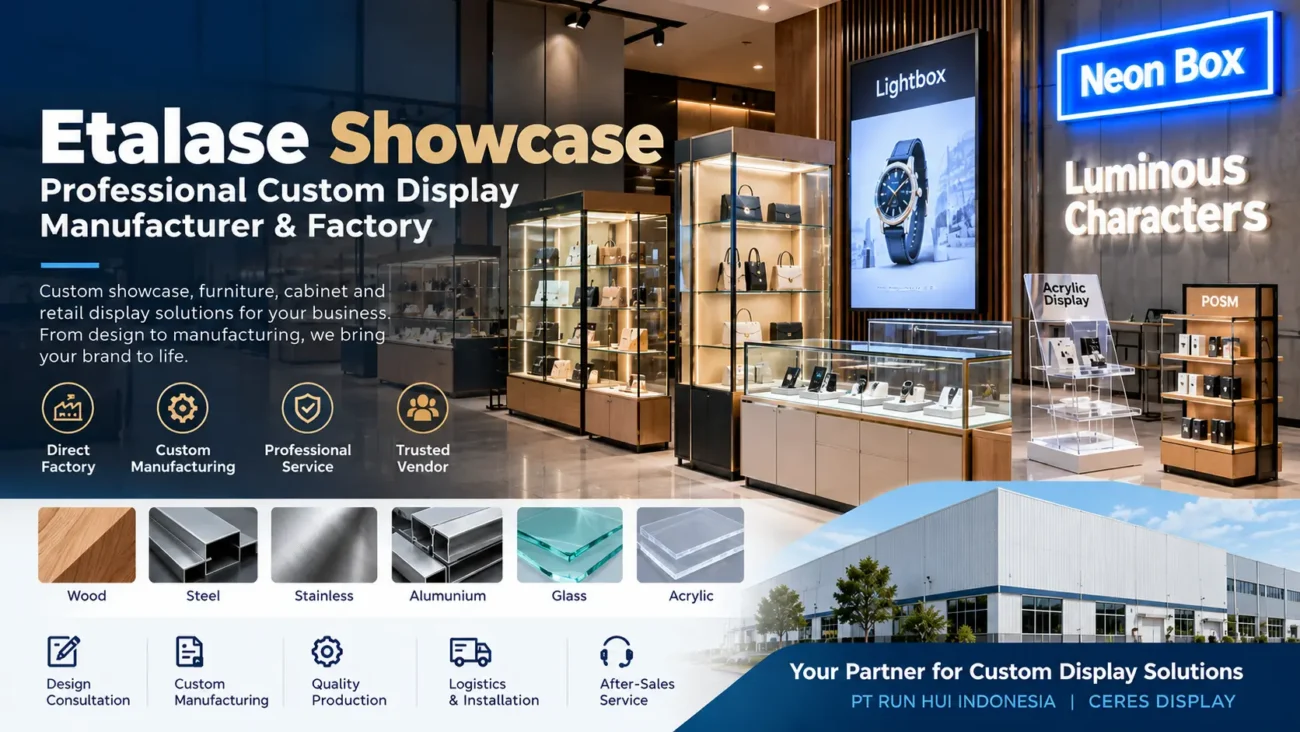
PT Run Hui Indonesia provides manufacturing support for custom retail display requirements, including glass showcases, acrylic display cases, counter cabinets, retail shelving, product presentation units, and illuminated display fixtures. Each solution can be developed according to project specifications, material preferences, product dimensions, store layouts, and brand presentation requirements.
Whether you are planning a new retail outlet, upgrading an existing showroom, or developing display fixtures for multiple locations, a custom approach helps align the product design with your operational and visual requirements.
What Is a Custom Retail Etalase?
A custom retail etalase is a display case or showcase developed according to specific business requirements rather than relying solely on standard sizes and configurations. Customization may include dimensions, shape, material selection, shelf arrangement, door mechanisms, locking systems, lighting, finishes, and supporting components.
This approach allows businesses to develop fixtures that accommodate their products and fit their available retail space.
For example, an electronics retailer may require a showcase with dedicated compartments for devices and accessories. A cosmetics store may need tiered shelves to display multiple product categories, while a jewelry retailer may prioritize visibility, organized compartments, and controlled access.
Custom retail display cases can therefore serve different functions depending on the products being presented and the operating environment.
Benefits of Custom Retail Display Cases
1. Improve Product Presentation
A well-planned display case helps highlight product shape, color, details, and arrangement. Shelf positioning, spacing, transparency, and lighting can be coordinated to create a more structured presentation.
This is particularly relevant for products that benefit from clear visibility, such as electronics, accessories, cosmetics, jewelry, and selected merchandise.
2. Make Better Use of Retail Space
Custom dimensions allow display fixtures to fit the available floor area, wall sections, corners, or countertop spaces. Wall showcases, floor-standing cabinets, corner units, and countertop displays provide different ways to organize merchandise.
Careful planning also helps maintain convenient customer access and practical replenishment areas.
3. Support Brand Identity
Colors, finishes, shapes, and construction details can be developed to complement a company’s visual identity. For businesses operating multiple outlets, documented design specifications can also support consistency across locations.
4. Accommodate Different Product Requirements
Each product category may require a different display configuration. Small items may need dividers and tiered shelves, while electronic devices may require dedicated supports, cable access, or specific viewing angles.
Custom development makes it possible to address these requirements during the design stage.
5. Support Retail Expansion
Businesses planning new outlets or store renovations can use a consistent fixture design as the basis for future procurement. Standardized dimensions, materials, and assembly details help establish a repeatable reference for subsequent production orders.
Types of Custom Retail Etalase and Showcases
Selecting the right display type depends on product dimensions, installation space, accessibility, and the intended presentation style.
Glass Showcases
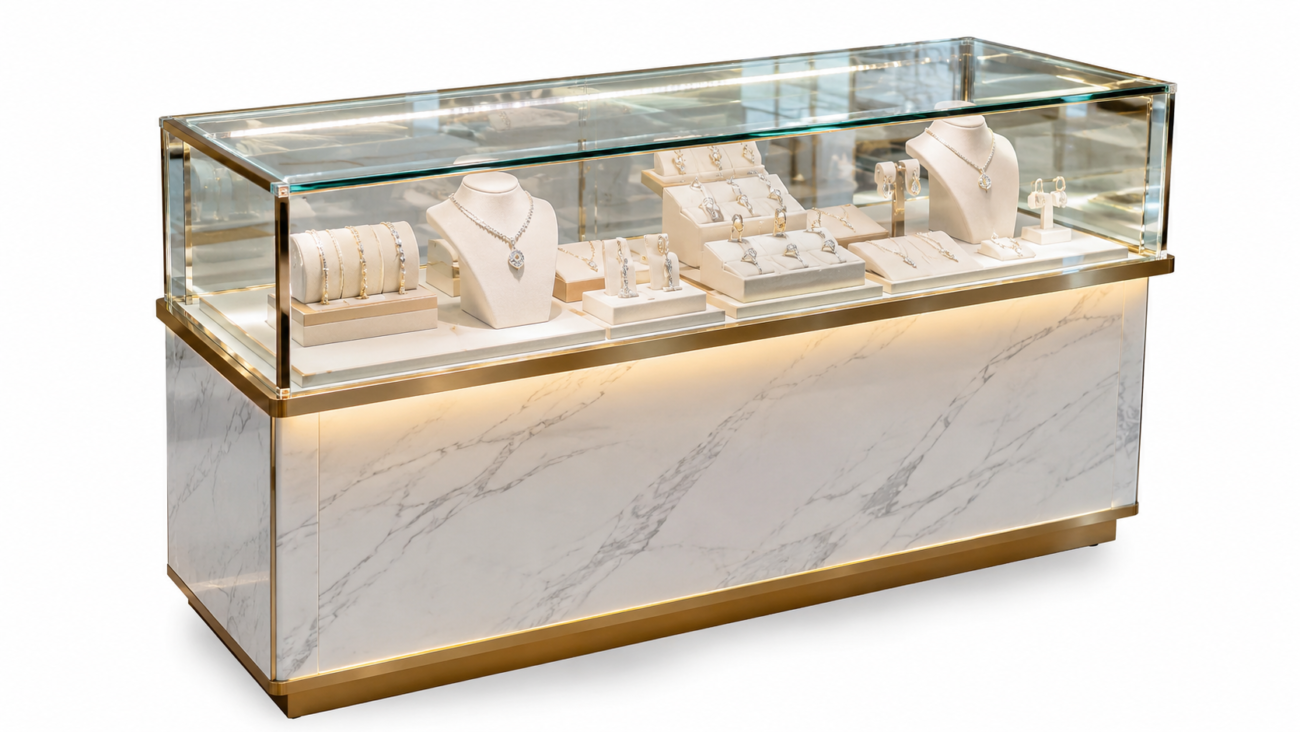
Glass showcases are suitable for products that need clear visibility while benefiting from a physical barrier against direct handling. Potential applications include jewelry, accessories, collectibles, and selected retail merchandise.
Design options may include sliding doors, hinged doors, shelves, and locking mechanisms. Glass type, thickness, supporting structure, and hardware should be selected according to the intended use and construction requirements.
Acrylic Display Cases
Acrylic display cases offer a contemporary appearance and can be developed in different shapes and configurations. Transparent panels allow products to be viewed from multiple directions, depending on the design.
Applications may include countertop displays, small merchandise showcases, promotional products, accessories, and selected electronic items. Material thickness and joint construction should be appropriate for the dimensions and expected load.
Wall-Mounted and Corner Showcases
Wall showcases use vertical space to organize merchandise, while corner showcases are designed to fit areas where two walls meet.
These configurations can help businesses make better use of limited retail space. Design planning should consider product visibility, installation access, replenishment, and cleaning requirements.
Floor-Standing Showcases and Counter Cabinets
Floor-standing showcases can serve as primary display units or form part of a coordinated retail fixture arrangement. Counter cabinets may incorporate shelves, enclosed storage, doors, and compartments to accommodate specific operational needs.
For larger units, structural support, load distribution, stability, and installation conditions should be considered during design development.
LED-Lit Retail Showcases
LED-lit showcases can help emphasize product details and improve visibility in selected retail environments. Lighting placement, color temperature, wiring routes, and access for maintenance should be planned alongside the display structure.
The lighting configuration should complement the products and the desired retail atmosphere rather than overpowering the presentation.
Material Options for Custom Retail Display Manufacturing
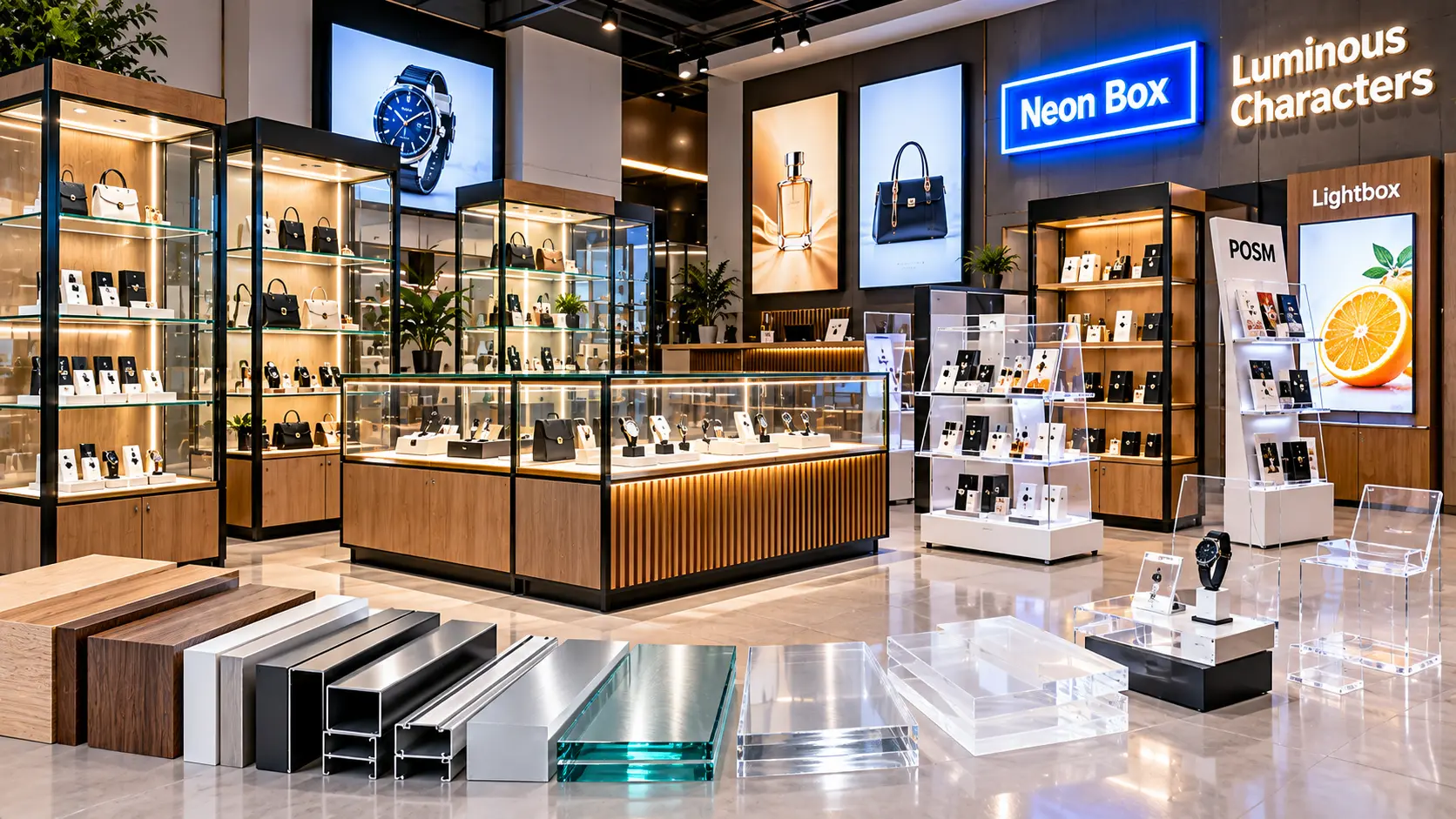
Material selection affects the appearance, construction, maintenance requirements, and manufacturing process of a retail display case. Different materials may also be combined to meet specific functional and design objectives.
Glass can be used for transparent display panels. The appropriate type and thickness depend on the panel dimensions, supporting structure, and intended application.
Acrylic is suitable for transparent showcases, holders, partitions, and selected display components. Thickness and joining methods should be determined according to the size and load requirements.
Laminated panels can be considered for display cabinets, counters, and selected structural components. Available colors and textures provide flexibility when coordinating fixtures with store interiors.
Metal can be used for frames, brackets, supports, and structural components. Material grade, thickness, fabrication methods, and finishing depend on the product’s intended function.
Aluminum may be suitable for selected frames and profiles where structured construction and a contemporary appearance are required.
The final material combination should account for product weight, expected usage, maintenance, visual requirements, project budget, and the installation environment.
Custom Retail Etalase Applications Across Industries
Electronics and Smartphone Retail
Electronics showcases can be developed to present smartphones, accessories, demonstration devices, and related products. Design considerations may include spacing, viewing angles, device positioning, cable routing, and security requirements.
Cosmetics and Beauty Products
Cosmetics displays may use tiered shelves, organized compartments, and selected lighting features to present products by category or product line.
Material finishes and display dimensions can be coordinated with the store’s interior and visual merchandising approach.
Jewelry and Accessories
Jewelry and accessory showcases may require smaller compartments, transparent panels, and suitable access controls. The material and finish should support a clean, organized presentation while meeting the product’s practical requirements.
Fashion and Merchandise
Retail display cases can accommodate accessories, merchandise, collectibles, and promotional items. Design considerations include product dimensions, display frequency, replenishment access, and compatibility with the store concept.
Showrooms and Promotional Areas
Showrooms may combine display cabinets, presentation counters, and dedicated product units to create a coordinated arrangement. Promotional displays can also incorporate design elements that align with a campaign or brand identity.
Custom Etalase Design and Manufacturing Process
A clear project specification helps align design development, material selection, and manufacturing activities. A typical process may include the following stages.
- Requirement consultation: Identify the product category, intended function, installation location, and usage requirements.
- Design and dimension planning: Define the shape, dimensions, shelf configuration, door access, and supporting components.
- Material selection: Evaluate glass, acrylic, laminated panels, metal, aluminum, or suitable combinations.
- Design approval: Review drawings, construction details, finishes, and specifications before production.
- Manufacturing: Fabricate the display according to the approved project requirements.
- Final inspection and delivery: Review dimensions, appearance, components, and agreed project requirements before shipment.
Sample development may be considered when a project requires evaluation of the design, materials, or functionality before larger production quantities are ordered.
The actual process can vary depending on design complexity, order volume, and technical requirements.
Custom Etalase Manufacturer for Business Projects
PT Run Hui Indonesia is a manufacturing company based in Balaraja, Tangerang, Indonesia, with operations dating back to 2017. The company supports project-based requirements for display products, retail furniture, signage, and promotional fixtures.
For custom retail etalase projects, product development may include cabinet structures, material selection, dimensions, shelf arrangements, door systems, surface finishes, and other supporting components. Final specifications are established through project consultation and agreement.
A specification-led manufacturing approach helps businesses plan display fixtures around their product characteristics, store layouts, and operational needs. For companies managing multiple outlets, documented design references can also support consistency in subsequent procurement.
To facilitate project evaluation, prospective customers can prepare reference images, product dimensions, available installation space, estimated quantities, preferred materials, and any installation requirements.
Request a Custom Retail Etalase Quotation
Planning a custom display case for a retail store, showroom, electronics outlet, boutique, or multi-location retail business?
Discuss your design and manufacturing requirements with PT Run Hui Indonesia. Share your product category, preferred dimensions, material options, visual concept, and estimated quantity to help define the project specifications.
CONTACT US
Related Products
Explore a wide range of custom display, signage, furniture, and branding solutions from CERESDISPLAY.ID.
Showcase Display | Store Furniture | Neon Box | 3D Letters | Acrylic Display | Outdoor POSM | Clothing & Garments
Connect with CERESDISPLAY.ID
Explore our manufacturing portfolio, latest projects, workshop activities, and company updates through our social media channels.