


Custom Table Manufacturer for Retail Displays and Commercial Spaces

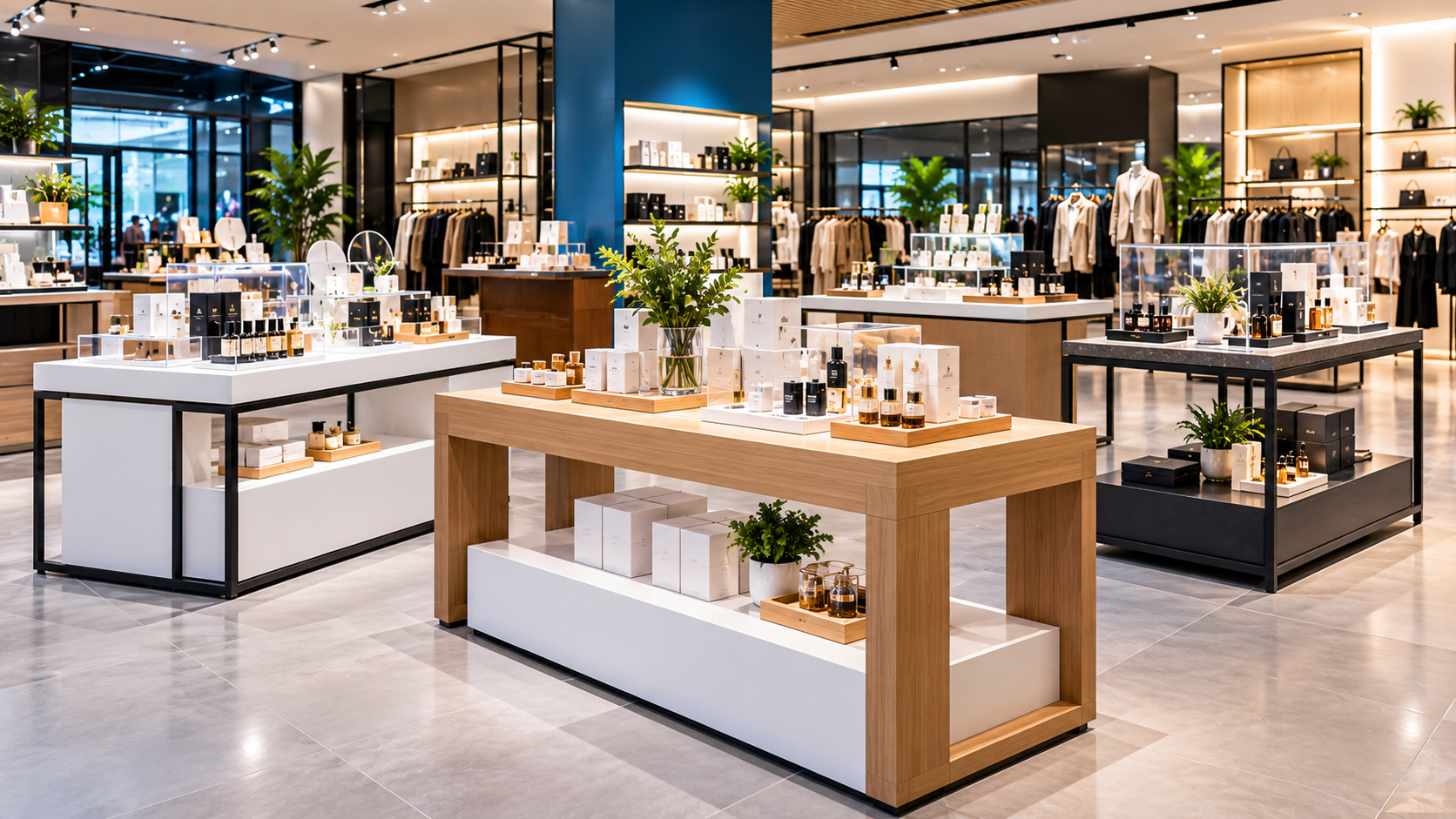
Businesses that need effective product presentation solutions often require furniture designed around their specific products, available space, and promotional objectives. A custom table manufacturer can help develop made-to-order tables for retail displays, product presentations, advertising campaigns, showrooms, and other commercial environments.
Unlike standard tables, custom display tables can be manufactured according to specific dimensions, materials, finishes, structural requirements, and branding concepts. This flexibility allows businesses to create furniture that supports product visibility, organizes merchandise, and complements their retail or commercial interiors.
PT Run Hui Indonesia provides customized display and furniture solutions for business applications. Through coordinated design, sample development, production, logistics, and project support, businesses can plan table designs according to their operational requirements and project specifications.
Whether you need a promotional display table for a marketing campaign, a retail display table for a permanent store installation, or a custom commercial table for a showroom, selecting the right manufacturing partner is an important step toward achieving the desired result.
What Is a Custom Table Manufacturer?
A custom table manufacturer produces tables according to the specifications and requirements of individual customers or commercial projects.
Instead of choosing exclusively from standard furniture catalogs, businesses can request specific dimensions, table shapes, structural configurations, surface finishes, and material combinations.
Custom tables can also incorporate storage compartments, product holders, display shelves, branded panels, and other functional elements, depending on the intended application.
For retail and commercial projects, these tables serve more than one purpose. They provide a functional surface while helping businesses organize products, communicate promotional messages, and create a consistent presentation environment.
Common applications include:
- Retail product display tables.
- Promotional and advertising tables.
- Product demonstration tables.
- Point-of-sale display tables.
- Custom retail counters.
- Showroom presentation tables.
- POSM display furniture.
- Custom tables for exhibitions and commercial events.
Working directly with a manufacturer allows businesses to coordinate product specifications before production begins, helping ensure that the finished tables meet the intended requirements.
Why Choose Custom Tables for Retail and Commercial Projects?
Custom tables provide businesses with greater flexibility when standard furniture does not meet their functional or presentation needs.
The right design can improve the organization of merchandise, accommodate specific product dimensions, and support promotional activities in different commercial environments.
1. Designed Around Your Products
Different products require different display configurations.
Small consumer goods may benefit from compact tables with organized compartments, while larger products may require wider surfaces and stronger structural support.
A custom table can be designed around product dimensions, display quantities, weight requirements, and customer interaction.
Businesses can specify table height, width, depth, surface layout, and additional features to suit their products.
This approach helps create a more practical presentation area while making efficient use of available floor space.
2. Flexible Dimensions and Configurations
Retail stores, showrooms, and exhibition spaces often have different layout requirements.
Standard tables may not fit the available space or accommodate the intended merchandise arrangement.
Made-to-order tables can be manufactured according to project-specific measurements and configurations.
Depending on the design, options may include rectangular tables, compact promotional units, multi-level display tables, modular structures, and tables with integrated storage.
Accurate measurements and approved technical drawings help reduce the risk of dimensional mismatches during installation.
3. Material Selection for Different Applications
Material selection affects the appearance, durability, maintenance requirements, and production cost of a custom table.
Depending on the application, possible material options include:
- Wood-based panels: Suitable for many retail tables, counters, and commercial furniture designs.
- Solid wood: Provides a natural appearance for selected furniture concepts.
- Metal: Useful for specific frame structures and industrial-style designs.
- Acrylic: Suitable for selected lightweight display components and product presentation applications.
- Glass: Can be incorporated into appropriate designs when visibility and appearance are important.
- Laminated surfaces: Offer a range of colors, patterns, and finishes for commercial furniture.
Material suitability depends on the table’s intended use, structural requirements, expected loading, environmental conditions, and maintenance needs.
A manufacturing partner can help coordinate the material specifications with the design and functional requirements of the project.
4. Consistent Designs for Multiple Locations
Businesses operating multiple stores or conducting recurring promotional campaigns may need tables with consistent dimensions, finishes, and visual characteristics.
Working with a manufacturer makes it possible to establish standardized specifications for repeat orders.
Approved drawings, material references, and production samples can serve as benchmarks for subsequent manufacturing batches.
This is particularly useful for retail chains, franchise operators, product distributors, and companies managing promotional activities across several locations.
5. Customization for Branding and Promotional Campaigns
Display tables can be developed to support product launches, seasonal promotions, in-store advertising, and other marketing activities.
Depending on the design, customization may include branded panels, custom colors, product information holders, integrated storage, and designated areas for promotional materials.
These features can help create a more consistent presentation aligned with the campaign concept.
For temporary promotions, businesses should also consider portability, assembly requirements, storage, and the expected duration of use when choosing a table design.
Types of Custom Tables for Retail Displays and Commercial Spaces
The most suitable table design depends on the products being presented, the environment, and the intended business objective.
Below are several common types of custom tables used in commercial applications.
1. Custom Display Tables
A custom display table provides a dedicated surface for presenting products in retail stores, showrooms, and commercial environments.
These tables can be designed with specific dimensions, finishes, storage compartments, and structural configurations.
Applications include product merchandising, product collections, featured merchandise, and showroom presentations.
Depending on the project, display tables may use open structures, enclosed cabinets, multiple display levels, or integrated shelving.
2. Retail Display Tables
Retail display tables help organize merchandise and make products easier for customers to view and access.
They are commonly used in department stores, specialty shops, supermarkets, fashion stores, and other retail environments.
A custom retail display table can be designed around product categories, available floor space, store layout, and merchandising requirements.
Features may include lower storage shelves, divided display areas, durable surfaces, and coordinated finishes.
For businesses with multiple outlets, standardized table specifications can help maintain a consistent store appearance.
3. Advertising and Promotional Tables
Advertising tables support product promotions, sampling activities, demonstrations, and direct customer engagement.
They are often used for marketing campaigns in retail stores, shopping centers, exhibitions, and event venues.
A promotional table may incorporate branded panels, storage compartments, product holders, and designated working areas for promotional staff.
When developing a table for a temporary campaign, businesses should consider ease of transportation, setup time, durability, and storage between events.
4. Custom POSM Display Tables
Point-of-Sale Materials (POSM) displays are used to support product visibility and marketing activities at retail locations.
Custom POSM tables can be developed for specific brands, product categories, promotional periods, or store layouts.
Depending on the campaign, the design may incorporate product shelves, branded surfaces, promotional graphics, storage areas, and other display features.
The final configuration should reflect the product’s dimensions, required display quantity, expected customer interaction, and campaign duration.
5. Custom Etalase Tables
An etalase table combines a display surface with selected enclosure or cabinet features, depending on the design.
It can be used to present products while providing additional protection, organization, or storage.
Potential applications include accessories, merchandise, specialty retail products, and selected showroom displays.
Design options may include glass panels, acrylic components, storage compartments, locking features, and customized dimensions.
Material and construction choices should reflect the value of the products, the display environment, and the required level of protection.
6. Product Presentation Tables
Product presentation tables are designed for demonstrations, consultations, product launches, and showroom activities.
They provide a dedicated area for displaying products and explaining their features to prospective customers.
Depending on the application, the table may include integrated storage, cable management, accessory holders, or specialized surface configurations.
These tables can be designed to support both visual presentation and practical day-to-day use.
7. Modular Display Tables
Modular display tables use components or configurations that can be arranged to accommodate different layouts.
They can be useful for retailers and event organizers who frequently change their merchandising arrangements.
Depending on the design, modular tables may support different combinations, layouts, or display configurations.
Businesses should confirm connection systems, stability, loading requirements, and assembly procedures before selecting a modular design.
Custom Table Materials: How to Choose the Right Option
Choosing the appropriate material is an important part of developing a custom table.
The best option depends on the design concept, product weight, expected usage, maintenance requirements, and budget.
Wooden Display Tables
Wood and wood-based panels are commonly used for retail tables, commercial counters, and showroom furniture.
They offer a variety of design possibilities through different colors, surface textures, laminates, and finishes.
Wood-based materials can be suitable for many indoor commercial applications when the specifications are selected according to the intended use.
Metal Display Tables
Metal can be used for table frames, structural supports, and selected furniture components.
Depending on the design and material specification, metal structures can support particular loading requirements and visual styles.
The frame dimensions, connections, surface treatment, and corrosion protection should be considered based on the intended environment.
Acrylic Display Tables
Acrylic is useful for selected display applications where visual clarity, lightweight components, or a contemporary appearance are desirable.
It can be incorporated into product holders, display surfaces, panels, and other components depending on the design.
The suitability of acrylic depends on the expected load, dimensions, handling conditions, and required resistance to scratching or impact.
Custom Tables with Combined Materials
Some commercial projects benefit from combining different materials.
For example, a table may use a wood-based panel for its main surface, a metal frame for structural support, and acrylic components for product presentation.
Combining materials allows designers to balance appearance, functionality, and manufacturing requirements.
The final specification should be established before production to ensure that the materials and construction methods are appropriate for the application.
The Custom Table Manufacturing Process
A structured manufacturing process helps businesses coordinate their design requirements with production, delivery, and installation planning.
PT Run Hui Indonesia can coordinate customized furniture and display projects through the following stages, depending on the agreed scope of work.
Step 1: Design Coordination
The first stage involves identifying the purpose of the table and establishing the required specifications.
Clients can provide reference images, technical drawings, product dimensions, quantities, preferred materials, and information about the intended installation location.
The manufacturer can then evaluate the initial requirements and coordinate the design details.
Important considerations include table dimensions, product placement, expected loading, storage needs, branding elements, and access requirements.
Step 2: Sample Development
For projects that require additional design validation, a sample or prototype can be developed before the main production run.
The sample can be reviewed for dimensions, material selection, surface finish, structural details, and functional suitability.
Any required adjustments should be discussed and approved before final specifications are confirmed.
This stage is particularly valuable for larger orders and projects involving specific design requirements.
Step 3: Production
Once the specifications have been approved, production can proceed according to the agreed project scope and schedule.
Production planning considers order quantity, material availability, design complexity, manufacturing requirements, and quality control procedures.
Clear documentation helps establish consistent references for the finished products.
For repeat orders, approved specifications can also support consistency between production batches.
Step 4: Logistics and Delivery
After production, tables are prepared for delivery according to the project’s logistics requirements.
Depending on the product design, planning may include packaging, component protection, shipment coordination, and delivery scheduling.
For projects involving multiple locations, delivery arrangements should be coordinated with site readiness and the installation plan.
Step 5: Installation Coordination
Some custom tables can be delivered as complete units, while others may require assembly at the destination.
Installation requirements depend on product dimensions, structural design, access conditions, and the intended location.
Businesses should discuss these requirements during the planning stage to clarify whether on-site assembly or installation support is needed.
The availability and scope of installation services should be confirmed for each project.
Step 6: After-Sales Support
After-sales support helps businesses address questions or concerns after delivery and installation.
Before placing an order, clients should clarify the applicable warranty conditions, support procedures, and responsibilities for adjustments or repairs.
Clear arrangements help simplify communication and post-delivery coordination.
What Determines the Price of a Custom Table?
The cost of a custom table depends on its specifications, materials, quantity, and production requirements.
Because made-to-order tables are developed for specific applications, an accurate quotation should be based on the actual project requirements.
Several factors can influence the final price.
Table dimensions and design complexity
Larger tables or designs with multiple compartments, specialized structures, and additional components may require more material and manufacturing time.
Material selection
Wood-based panels, solid wood, metal, acrylic, glass, and other materials have different costs and processing requirements.
Surface finishes
Special colors, laminates, textures, decorative surfaces, and other finishing requirements can affect production expenses.
Additional features
Storage compartments, product holders, accessories, branded panels, and other functional elements may increase the cost.
Order quantity
The number of tables required affects material purchasing, production planning, setup costs, and manufacturing efficiency.
Sampling and design revisions
Prototype development and changes to approved specifications may introduce additional expenses.
Packaging and transportation
Packaging requirements, delivery distance, shipment volume, and site access can influence the overall project budget.
Assembly and installation
If the project requires on-site assembly or installation, these services should be clarified in the quotation.
To obtain a more accurate price estimate, businesses should provide product drawings or reference images, dimensions, quantities, material preferences, delivery location, and the expected completion date.
A detailed quotation helps procurement teams compare options and identify opportunities to optimize costs without compromising essential product requirements.
How to Choose the Right Custom Table Manufacturer
Selecting the right manufacturer is an important decision for businesses planning retail display or commercial furniture projects.
Before placing an order, consider the following factors.
Manufacturing Capabilities
Confirm that the manufacturer can produce the required table types, dimensions, materials, and quantities.
For complex projects, clarify the manufacturing processes and technical requirements involved.
Customization Options
Ask about available materials, finishing choices, structural configurations, accessories, and design modifications.
The manufacturer’s capabilities should match the project’s specifications.
Sample and Approval Procedures
Understand how drawings, material samples, prototypes, and final specifications will be reviewed and approved.
A clear approval process helps reduce misunderstandings during production.
Quality Control
Ask how materials, dimensions, structural components, finishing, and completed products are inspected.
Quality requirements should be established before manufacturing begins.
Production Lead Times
Request an estimated schedule based on order quantity, design complexity, material availability, and manufacturing capacity.
For time-sensitive promotional campaigns, allow sufficient time for design approval, sampling, production, and delivery.
Commercial Terms and Project Support
Review the quotation carefully, including product specifications, payment terms, packaging, transportation, installation, and applicable warranty conditions.
Clear communication throughout the project also helps ensure that requirements and responsibilities are understood by all parties.
By evaluating these factors, businesses can select a manufacturing partner based on overall project suitability rather than price alone.
Why Work with PT Run Hui Indonesia?
PT Run Hui Indonesia provides customized display and furniture solutions for retail and commercial applications.
For businesses seeking custom display tables, promotional tables, retail counters, and other made-to-order furniture, project coordination helps connect design requirements with manufacturing specifications.
The process can include design coordination, sample development, production planning, logistics, installation coordination, and after-sales support according to the agreed project scope.
This approach helps businesses establish clear requirements before production and evaluate the practical considerations involved in delivering customized furniture.
Whether you are preparing a new retail store, upgrading a showroom, planning an advertising campaign, or developing display furniture for multiple locations, the first step is to define the intended application and product specifications.
Sharing your requirements with the manufacturer provides a starting point for discussing design feasibility, material options, production quantities, and estimated costs.
Request a Custom Table Quotation
Looking for a custom table manufacturer for retail displays, product presentations, promotional campaigns, or commercial interiors?
PT Run Hui Indonesia can discuss your requirements for made-to-order display tables and customized furniture solutions.
To help establish the project scope, prepare the following information:
- Intended application and project type.
- Reference images, sketches, or technical drawings.
- Required table dimensions.
- Preferred materials and surface finishes.
- Estimated order quantity.
- Branding or promotional requirements.
- Delivery location and target completion date.
Providing these details helps clarify the required specifications and supports a more informed discussion about manufacturing options and estimated costs.
Contact PT Run Hui Indonesia through CERESDISPLAY to discuss your requirements. Share your design references, dimensions, preferred materials, quantity, and project timeline so the team can review the proposed scope and discuss the next steps.
CONTACT US
Related Products
Explore a wide range of custom display, signage, furniture, and branding solutions from CERESDISPLAY.ID.
Showcase Display | Store Furniture | Neon Box | 3D Letters | Acrylic Display | Outdoor POSM | Clothing & Garments
Connect with CERESDISPLAY.ID
Explore our manufacturing portfolio, latest projects, workshop activities, and company updates through our social media channels.